Up Your Alley: Changi - coastal wildlife, an old hospital and an airport that people call a second home
SINGAPORE: Information technology's been said that Changi Airdrome is peradventure the simply airport in the globe where generations of locals go to eat, drink, play, study and simply hang out.
But fewer are familiar with its surroundings, apart from the foodie haunt that is Changi Village.
It runs the gamut from the abundance of marine life on Changi Beach, to the abandoned Changi Infirmary that drew thrill seekers until it was fenced off.
And and so at that place are the people who pursue their passion at that place - from aeroplane spotters with their eyes trained on the sky, to breakdancers who built a community deep in the basement of the drome.
In this installment of Up Your Aisle, we met old-timers and insiders alike who let us in on what makes Changi special to them.
CHANGI VILLAGE: MORE THAN A FOOD PARADISE
People from all over Singapore brand the journey to Changi Village Bell-ringer Center for its laid-back vibe and nasi lemak, but at to the lowest degree 1 old-timer remembers the neighbourhood quite differently.
Back in the 1960s, Changi Hamlet was a "mini England", filled with parties, drinks and dancing in the street, 72-year-old Nikchand Munnilal, known as Nik, told us.
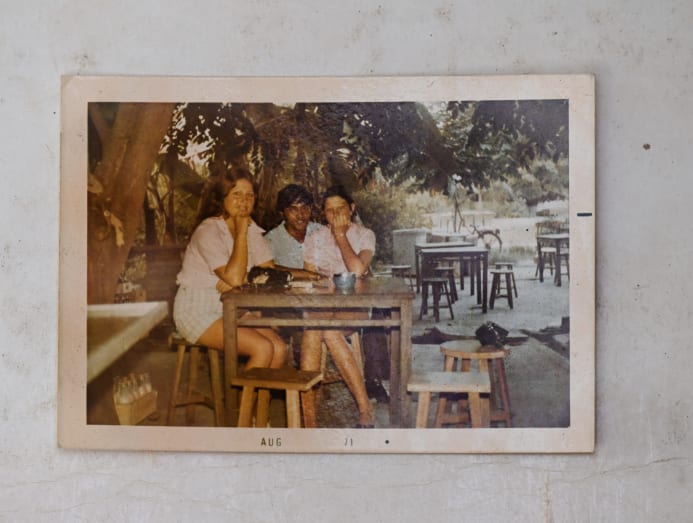
The village, after all, has its roots every bit a busy market place place for British troops who were based in the area until their withdrawal from Singapore in 1972.
Nik and his family unit moved to Selarang Campsite near Changi Village in 1965, due to his father'southward work. From in that location, Nik's deep affinity for the identify grew equally he mingled with the children of the British military personnel.
Recounting the disco nights, cheap alcohol and swims virtually Changi Point Bridge, Nik said: "Those days, Changi Hamlet was so interesting that everybody made (it) a betoken to visit."
He has not been to Orchard Road in ages, he added proudly. "Considering everything was hither! The bowling alley, the cinemas..."

Fifty-fifty though Nik no longer lives in the surface area, he religiously makes the trip downward to Changi Village Hawker Centre weekly to take a drink at Bala Cafe, a stall that has been in that location since 1979.

Another former resident, Laxhman Singh, 70, whose father owned a tailoring store in the surface area, said that the community was and then tightly knit, they were able to buy things on credit based on mutual trust.
Everyone knew each other back and then, Laxhman said. "There was absolutely no discrimination amid the various groups and everyone lived very harmoniously," he added, recalling how RAF personnel stepped in to help when a fire ravaged several shops in Changi Hamlet.
Laxhman's Primary one form teacher at Telok Paku Schoolhouse was Mr Soh Chuan Lam. His daughter, Geraldine Soh, says that walking down the main street of Changi Hamlet still reminds her of her babyhood days and "recalling my late father talking to the shop owners he knew".
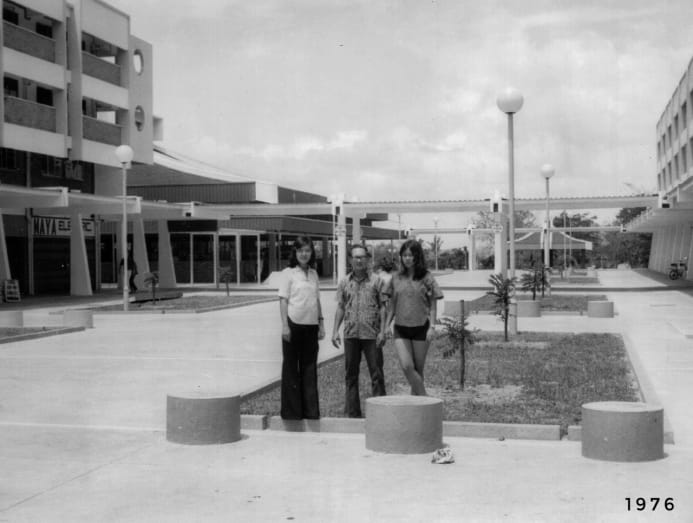

At present 66, Geraldine is based in Canada merely makes information technology a point to visit Changi Village each time she'due south back in Singapore.
She'due south also behind the Facebook grouping Memories of Changi Village, a more than 500-strong group that shares old photos of the neighbourhood, of cobblers hunched over footwear, merchants selling their wares on bicycles and push carts and makeshift stalls that lined the streets.
"Changi Village, being quieter and without high-rise (buildings), still feels similar the one-time days," she said.
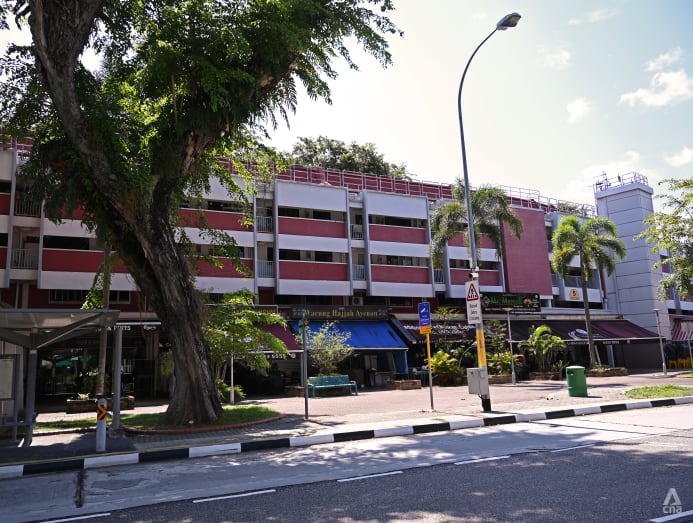
Laxhman himself now lives in Pasir Ris, the closest town he could find to Changi Village, and says he and his one-time neighbours still become back there and meet for old times' sake.
"Ane of the greatest joys I tin can tell you about Changi is: As we all matured in our lives, what is left is the almost wonderful closeness of a smashing family of truthful friends," he said.

Top 3 Changi Village spots Laxhman says he volition never forget
one. The sarabat stalls
"They used to make the all-time tea with roti john and were a good hangout for my friends when we needed to discuss personal matters or even school bug. Most of these stalls were all-dark snack confined and we could get there any time to catch a drink with friends. It was also hither where we made new friends."
two. Changi Cinema (where Changi Village Hawker Centre now is)
"Our favourite (place) to sentry movies. Linguistic communication movies (Hindi, Tamil and Malay) were 50 cents and you could catch an English film for thirty cents."
3. Weekly "pasar malam" (dark marketplace)
"These were usually held on Wednesday evenings and would last till late night (upwardly to 9pm or x pm). We could stay upward late beyond bedtime only to roam effectually the stalls and prices seemed unbelievably cheap. My family bought most of our household items here at the pasar malam. As teenagers we could likewise pick up some personal bargain items such as wallets, school stationery (and) fancy T-shirts."
Plummet
A short walk from the village, the 3.3km Changi Beach features prominently in their memories as well.
Geraldine remembers family unit picnics at the embankment, which involved feasting on the likes of rojak (mixed fruit salad) from a bicycle vendor and char bee hoon (fried vermicelli noodles).
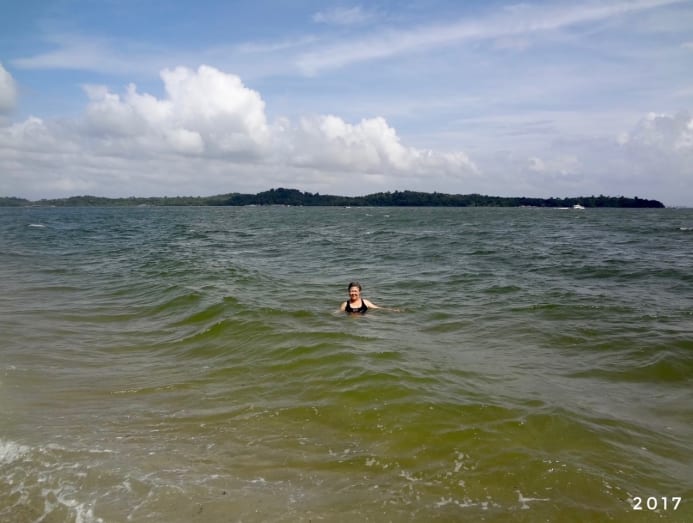
No trip back to Changi would be complete without a dip in the water, she said, calculation that the visits brought back babyhood memories of playing on the beach with her siblings, cousins and friends.
Laxhman, meanwhile, described the view from the beach as the "ultimate cure for whatever your heart is in need of".

THE REMARKABLE MARINE LIFE OF CHANGI Beach PARK
Geraldine also enjoyed exploring the marine life on the shore at low tide - a past-time that still draws people to Changi Beach.
The stretches of beach at Carparks 6 and seven have sandy and seagrass habitats respectively that brand it a goldmine for marine life enthusiasts.
"These habitats provide very unique animals such as seahorses and body of water urchins in the seagrass areas," said Marcus Chew, cofounder of Young Nautilus, an education centre that conducts intertidal walks.
"(In sandy areas), nosotros tin detect very interesting animals such as sand dollars, and moon crabs."
He added that his greatest find so far has been an octopus, known to be elusive and quick to hide from people.

At almost 7pm, the tide was almost 0.6m - low plenty to explore the intertidal zone, including a sandbar 2m from the shore.
Sand trails on the beach that we had thought were left past humans were actually, as Marcus explained, trails that sand dollars (a species of flat, burrowing sea urchins) get out as they burrow just below the sand'south surface. You can tell them apart from rocks and seashells because of their flexible spines that coruscate if you expect closely.
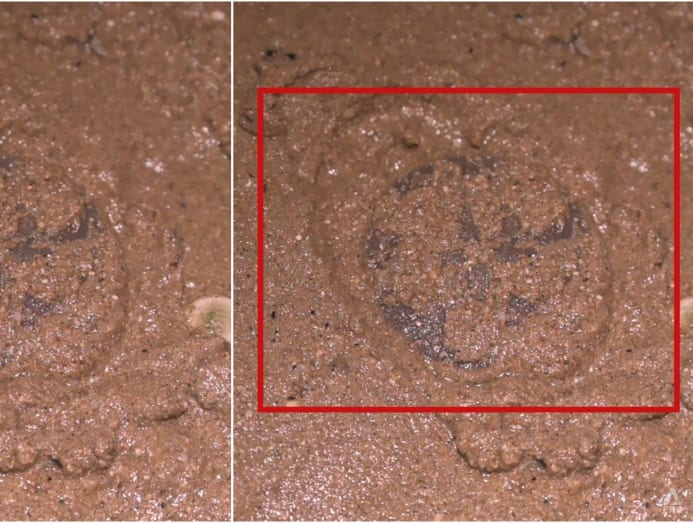
Marcus' trained center also picked out the finger-sized yellow and pink sea cucumbers nestled in the pockets of h2o that had collected in the sand.
He pointed out how sea cucumbers, for instance, exhale through their rear ends. Scrutinising the creatures, we watched as tiny bubbles appeared as the sea cucumber breathed.

We also establish a backbone of a cuttlefish with a calcium-rich layer underneath that was unexpectedly soft to the affect. The scratch marks on it, Marcus said, were made past other animals on the embankment that fed on the calcium.


Marcus also emphasised the importance of etiquette and safety when visiting intertidal areas like Changi Beach.
"With the contempo articles virtually public mistreating intertidal animals as they come up and dig and (bring) these animals (home), it is very important that we treat our own biodiversity with respect and care."
PLANE SPOTTING: "THE CLOSEST Affair TO TRAVELLING"
Peaceful every bit it may look, almost whatsoever visit to Changi Beach is invariably punctuated by the roar of planes overhead every bit they have off and country at the airdrome.
For the plane-spotting community that photographs, documents and studies these aircraft, the embankment provides vantage points to capture them.
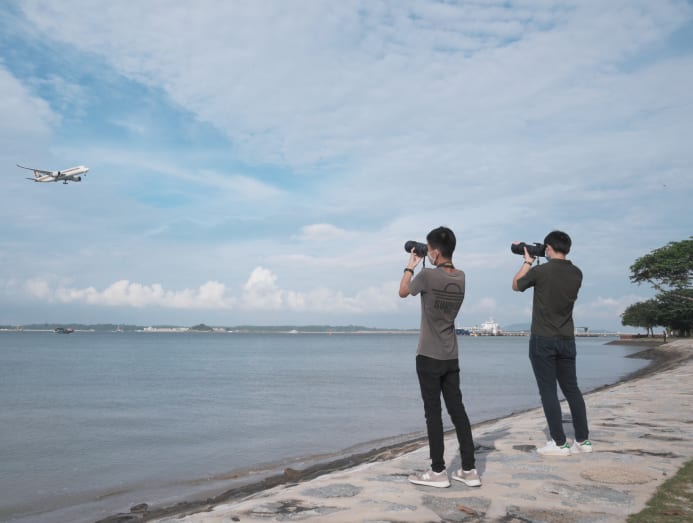
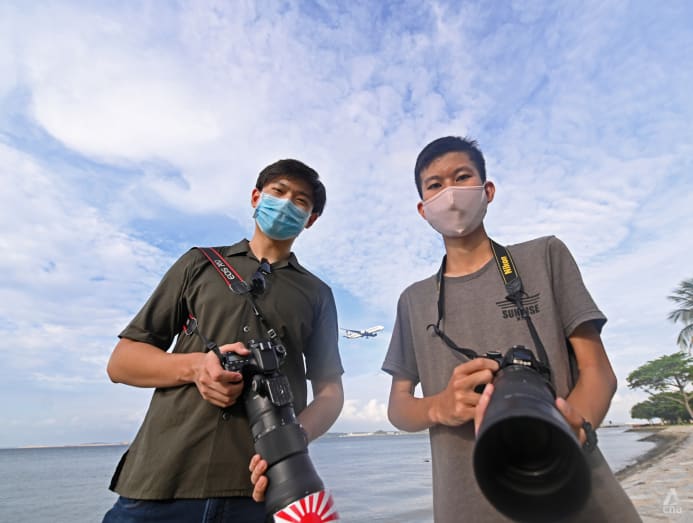
Carpark two at Changi Beach Park offers the best views of planes during sunsets, and that Carpark 5 is where they go their best shots at sunrise, airplane spotters Hu Xiang Shi and Nixon Ong told us.
Carpark five also offers the best close-up views with aircraft roaring directly overhead, frequently interrupting Xiang Shi equally he explained to us the planning procedure backside their shots, from tracking shipping movements in existent time on Flightradar24, to monitoring wind direction.
The spotters say their efforts are rewarded when they nail that one time-in-a-lifetime shot.
For both of them, ane such shot was of North Korean leader Kim Jong Un's plane from their vantage betoken at Carpark v, every bit it flew into Singapore for the Trump-Kim summit in 2018.
"It'southward non every day yous go to come across a North Korean aircraft lurking around the skies of Singapore," Nixon quipped.
"Only a handful of such aircraft remain in flight condition (as) most have either been scrapped or retired long ago.

Xiang Shi's and Nixon'south elevation picks of planes they've spotted at Changi
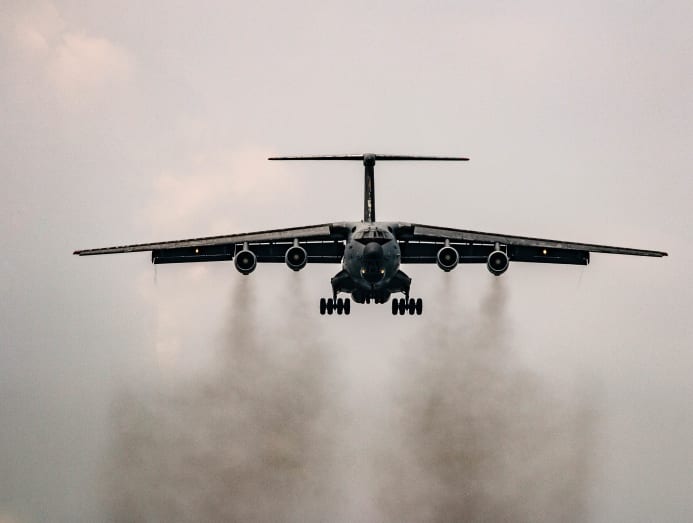
- The N Korean government'south Ilyushin IL-62
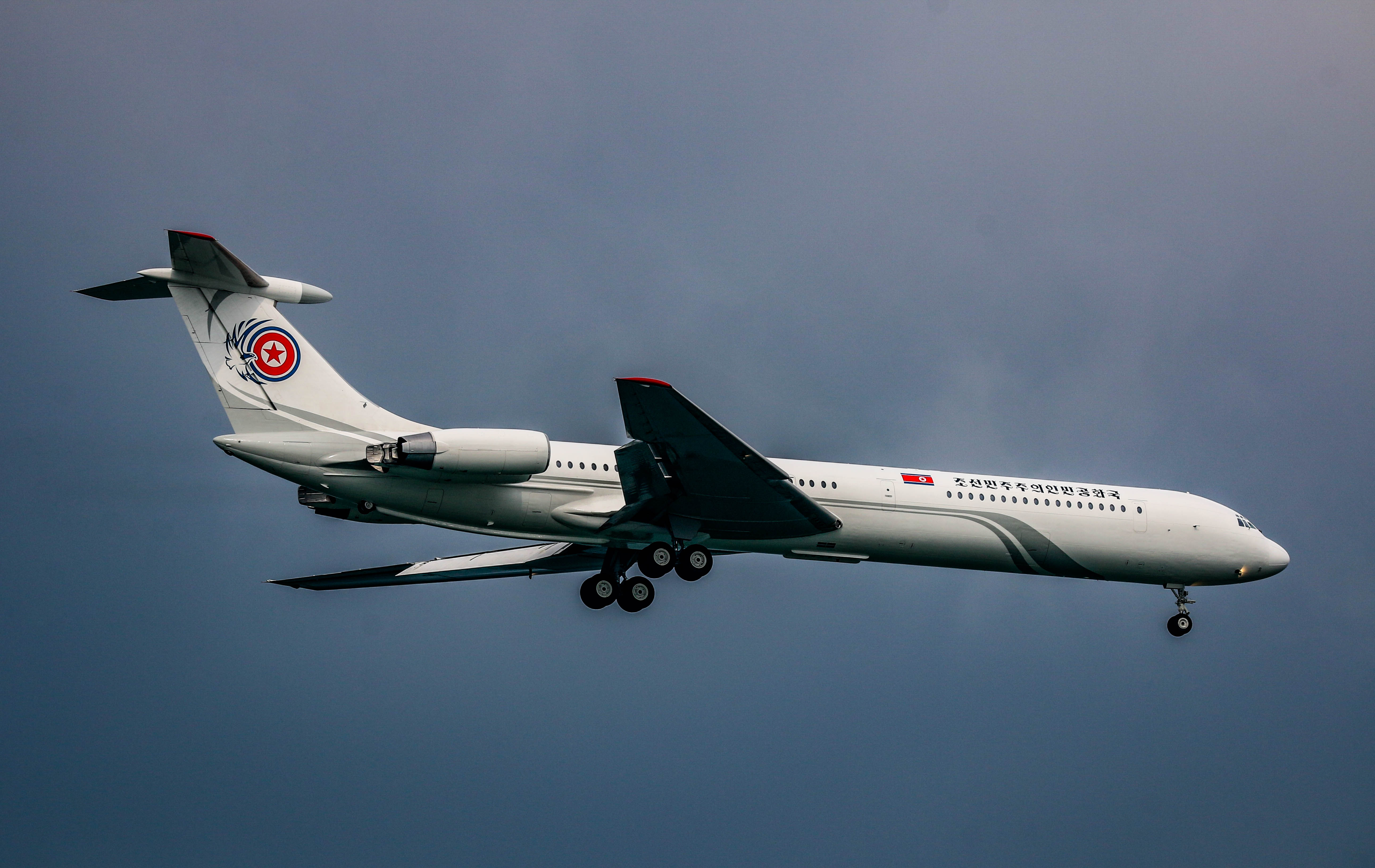
"Even though it is non my favourite shipping, this has to exist i of the rarest aircraft I've ever defenseless as only six remain in service today since its first flight in 1963," Xiang Shi said.
He nailed this shot at Carpark 5, as the Ilyushin ferried North Korean delegates into Singapore for the Trump-Kim meridian in 2018.
"It is besides special because it was here for the Trump-Kim superlative, which saw the two major leaders come across for the first time," Nixon said. "In a manner, nosotros are also documenting a historical moment through our shots."
- Volga-Dnepr Airlines' Antonov AN-124-100

"The AN-124-100 'Ruslan' is i of the biggest aircraft in the world. It is too non a very common aircraft to be seen outside of eastern Europe and Russia as information technology was built and designed back in the Soviet era," Xiang Shi said, adding information technology was the gilded rays from the sun that bounced off the jet's body that forenoon that made the photo special to him.
It "simply comes to Changi once every few months to deport outsized or COVID-19-related cargo", Nixon said.
- Fedex McDonnell DouglasMD-eleven

"The Dr.-eleven was actually produced by a visitor (McDonnell Douglas) that no longer exists today, then it'southward like capturing a part of history," said Nixon of one of his favourite planes, which he captured from Carpark 2.
- EVA Air's Hello Kitty Boeing 777-300ER and Boeing 747-400S
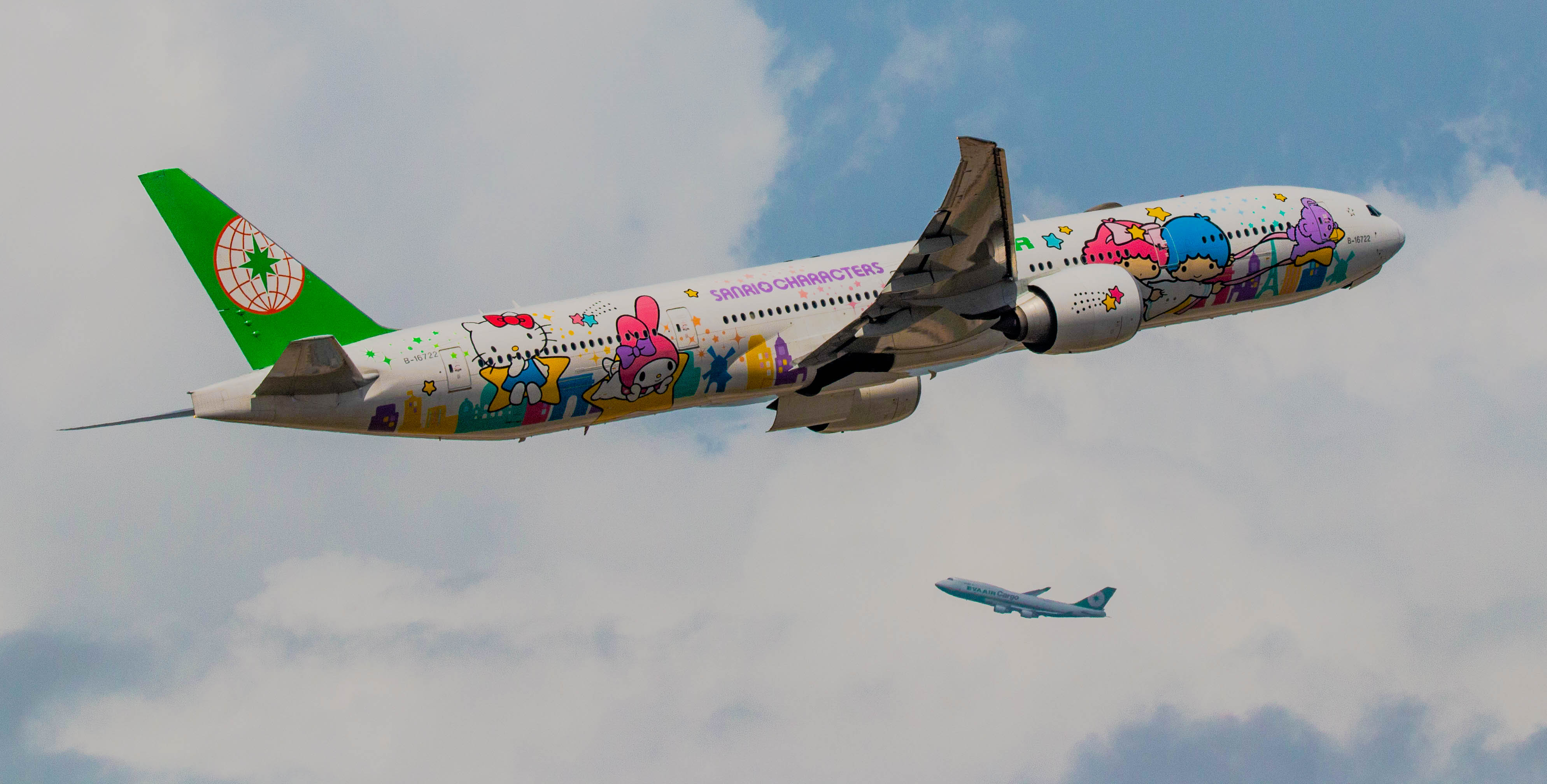
According to Xiang Shi, this 777-300ER is the "most iconic" aircraft in the EVA Air armada because of its How-do-you-do Kitty livery. The jet in the groundwork is a cargo jet that was on its terminal flying into Singapore, flown by his friend, Captain Andre Quiros.
"In my years of commercial aeroplane spotting, this has to be my favourite shot as information technology was the first fourth dimension that I managed to capture ii shipping flying in opposite (directions) inside the same frame," he said. "It takes luck."
Collapse
"The main thrill for me is … being able to spot rare aircraft and those with historical meaning in them," said Xiang Shi, who sometimes even cycles from Sengkang, where he lives, to Changi to catch the planes.
"This is as well the thing that is closest to travelling now."
Nixon as well uses airplane spotting to unwind. "It's a fleck of like an escape from reality because right now with COVID, it's easy to get defenseless upward in the negatives."
THE UNEXPECTED SIDE OF Onetime CHANGI HOSPITAL
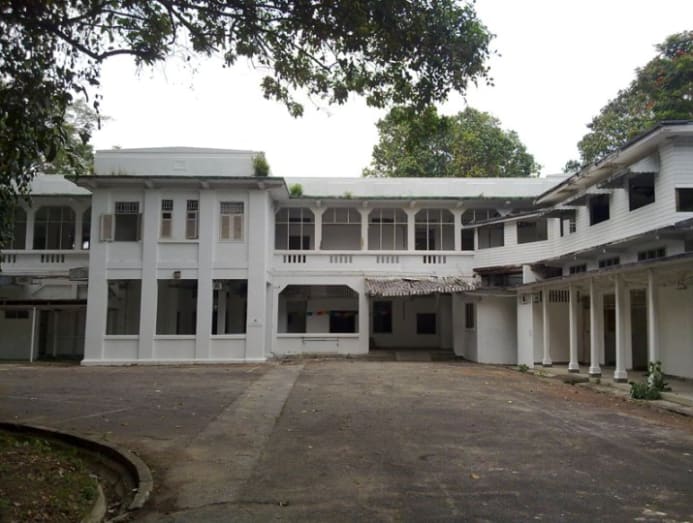
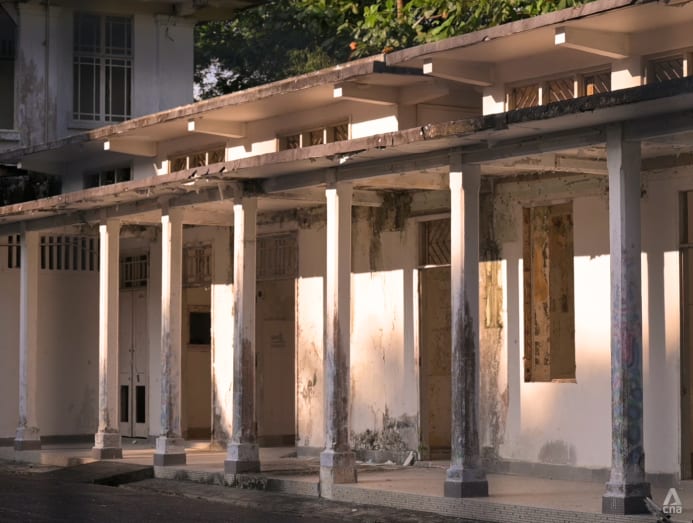
A stark white edifice at the end of Halton Road, overrun with underbrush and with graffiti scrawled beyond its facade, One-time Changi Hospital has had a long history: Previously a armed services base camp, it became a facility for prisoners of war during the Japanese Occupation, British soldiers afterward World State of war II, and later the public.
Abandoned since its closure in 1997, the landmark used to be a regular haunt for all sorts of urban explorers, from thrill seekers to vandals and ritual practitioners. It has besides become the setting for numerous ghost stories.


"I've met everyday Singaporeans that take told me they have visited OCH after a nighttime of clubbing and supper," paranormal investigator Noel Boyd said.
"If you search 'Old Changi Infirmary', you'll meet information technology on international websites. People talk about information technology all the time. I have a lot of tourists - when they visited Singapore, they wanted to come to OCH, considering they read about this in their own country."
The complex has since been airtight to the public and fenced off.
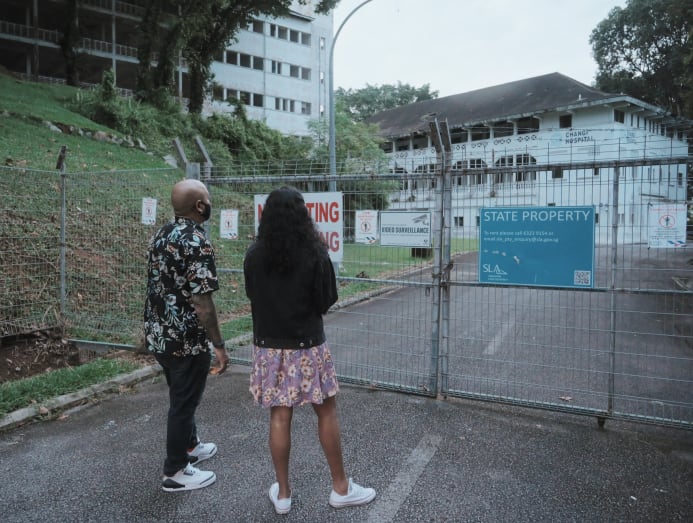
Relating his first time within Former Changi Infirmary, Noel spoke of his excitement at exploring the building.
"The adrenaline was pumping because I didn't know this identify at all, and so at each turn, it's something new. You don't know if there's going to be wild animals in there. Yous don't know if in that location are druggies upward on the second floor. So it was very exciting. And it was just me experiencing that - this historical building for the first time," he said.
"The concluding time I was in OCH was about six years agone, when it was still legal. We had special permission to enter the children's wing. To me information technology was a mind-blowing experience considering I got to feel it; I got to see where the sometime canteen is ... Information technology was a beautiful experience for me."
Every bit a paranormal investigator, Noel uses an electromagnetic field (EMF) detector to pick upward possibly unexplained changes in electromagnetic fields.
He showed us into a small disused guardhouse outside the hospital'south compound forth Hendon Road, which he said was used by the security officers who were stationed there to try to cease people from trespassing.
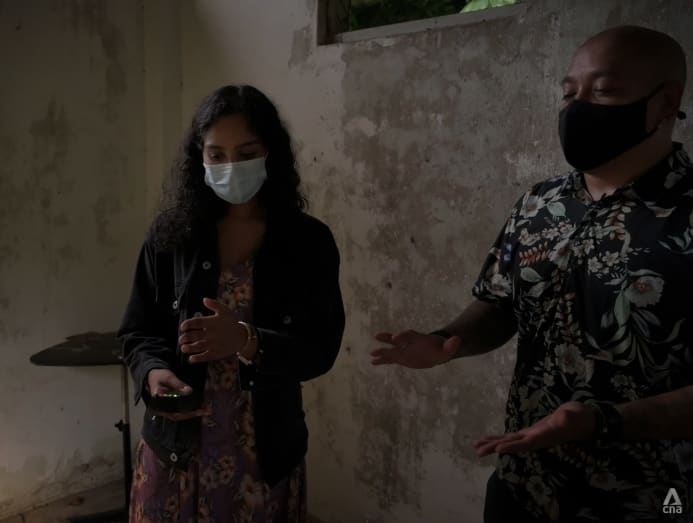
In a corner of the roughly 5 sqm room, the EMF device immediately started spiking, its entire array of LEDs lighting up.
"When information technology's ruby-red, that ways it's really close to us. It would probably be merely above u.s., or it could be backside us," Noel had told us earlier.
And just equally abruptly as the device had started flashing, it stopped, leaving only a single light-green LED glowing as we walked effectually the guardhouse with it.
Pressed for an unexpected fact nigh Old Changi Infirmary, Noel mused for a while earlier he said: "It's not as scary as everybody makes information technology out to be - and that's coming from me.
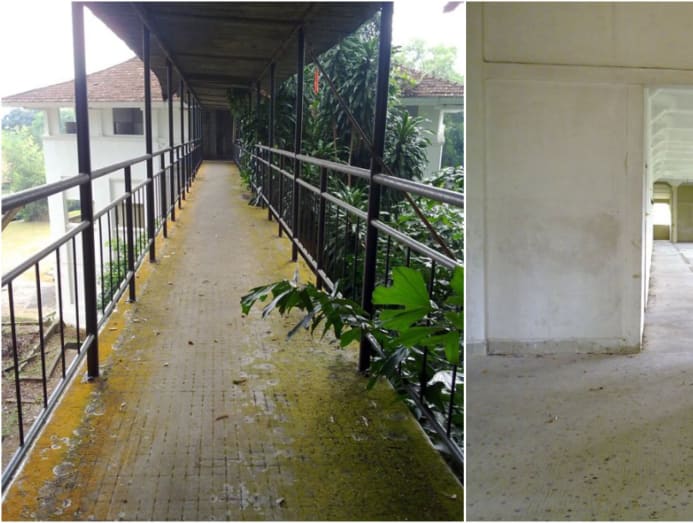
"If this was ever opened to the public, you can walk through it in the twenty-four hours. At night, information technology'south a niggling unsafe because you don't know how proficient the structure is.
"But information technology's very calming. You don't feel like you're going to exist scared at whatever moment unless you take a wild imagination."
SECOND Dwelling: CHANGI AIRPORT
'CHANGI HAS TO BE MY LIFE': AN AIRPORT EMPLOYEE OF 40 YEARS
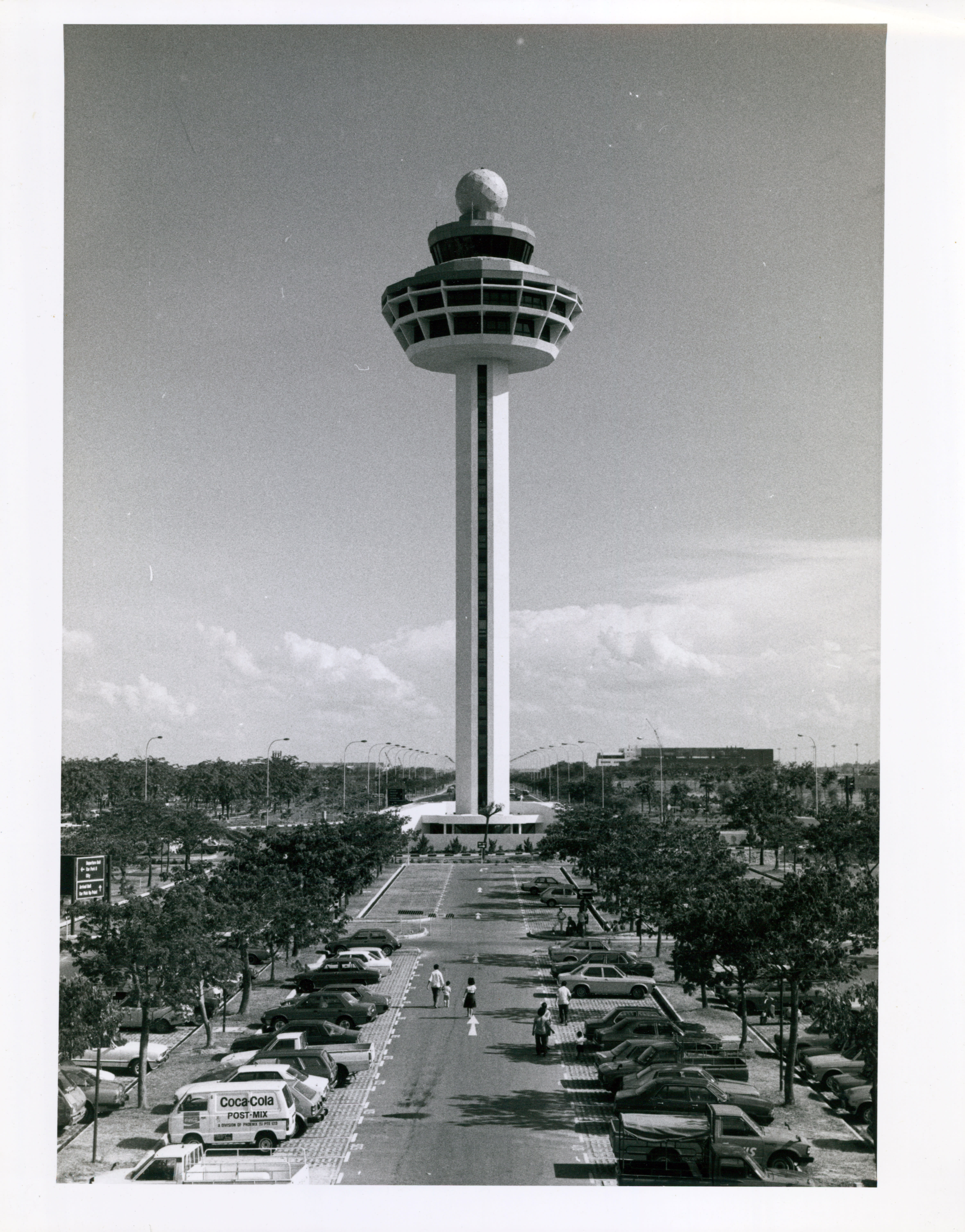
"I saw how Changi (Airport) grew from nothing to this edifice," said 60-yr-old Mohd Aqbal Fakir Khan, who has been working at the airport since 1982, just months after Terminal 1 opened the previous year.
"I decided Changi has to be my life."
Source: https://cnalifestyle.channelnewsasia.com/singapore/your-alley-changi-village-beach-airport-hospital-breakdancing-planespotting-285001
0 Response to "Up Your Alley: Changi - coastal wildlife, an old hospital and an airport that people call a second home"
Post a Comment