Limit Feeding Soyhulls to Beef Cows
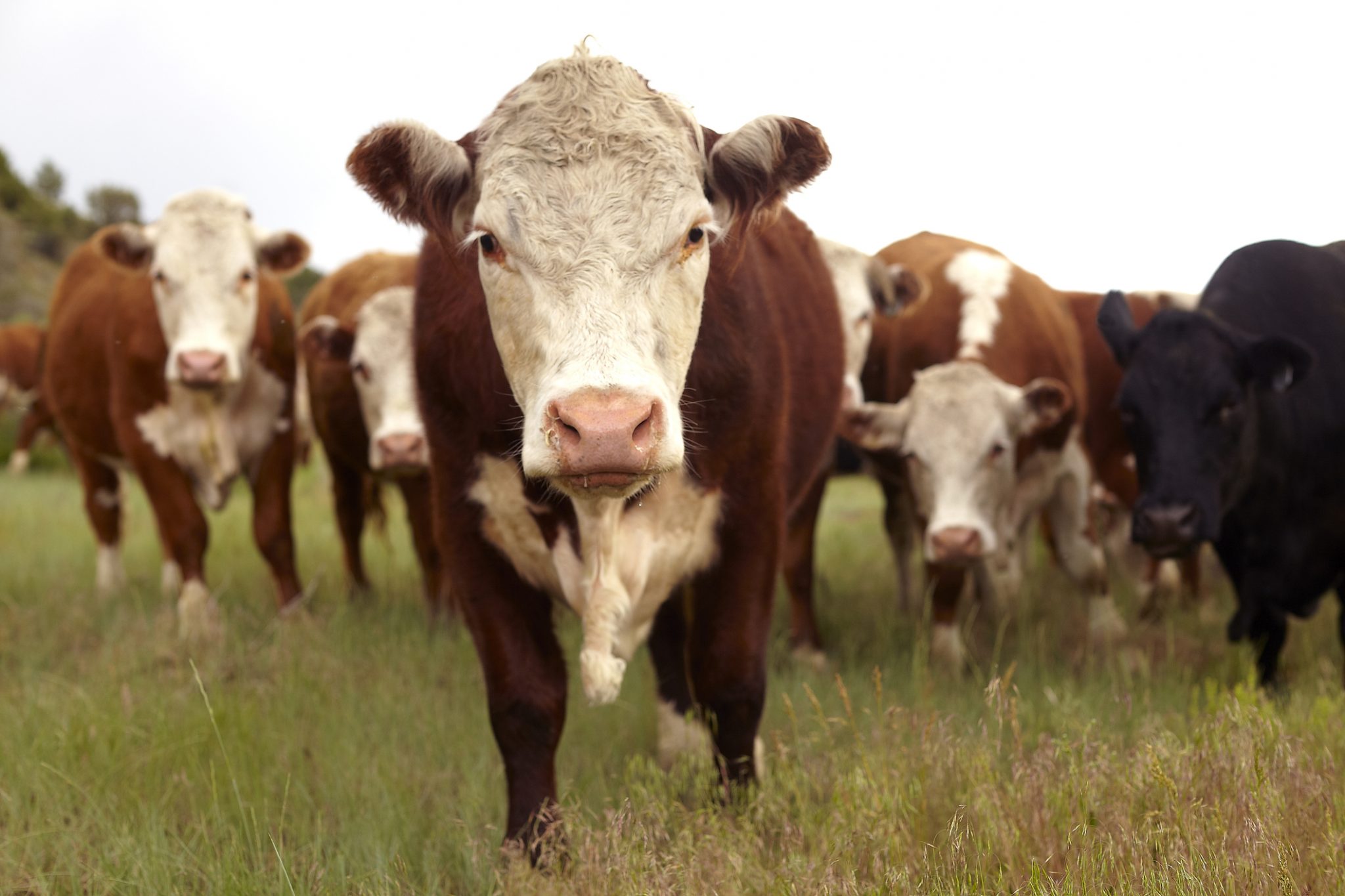
An intake limiter allows cattle gratuitous-choice access to feed while also controlling consumption. Information technology is a useful tool for producers needing reduced-labor feeding options.
Labor can be a limiting resources in the daily management and supplemental feeding of beef cattle during provender product gaps. Reducing the frequency of feeding or using self-limiting feedstuffs can assist producers meet cattle food requirements during those times.
Self-limiting feed contains one or more ingredients (an intake limiter) that when added to a feed blend or product help to control cattle feed consumption to a desired target level. Mutual ingredients used as limiters include common salt, organic acids, by-product oils, and meals. Selecting the appropriate feedstuff for an operation requires an understanding of the self- limiting feeds available, feed limerick, and the expected consumption level relative to beast nutrient requirements.
Common Commercially Available Self-Limiting Feeds
"Hot" Mixes
A hot mix often consists of a feed article and salt mixed together to limit intake. Salt is effective because there are applied limits to the amount of table salt that cattle can swallow each day.
In general, cattle will consume 0.1 pounds of common salt per 100 pounds of animal trunk weight per day. Based on this estimate, a 1,300-pound cow should swallow 1.three pounds of salt per mean solar day when composite with feed(s) for which intake is to exist limited. If a producer wants to target consumption of 2 pounds corn and 1 pound cottonseed repast per head per day, mixing one.iii pounds of common salt with these feeds will limit daily consumption of the total mixture to 4.3 pounds.
Intake of table salt-limited feeds may fluctuate significantly during the feeding period depending on environmental conditions, individual cattle preference for salt, and animal competition at the feeder. Feeds with relatively pocket-size particle size, such as cottonseed meal and soybean meal, mix better with common salt and provide more than consistent feed delivery than bulky feeds such as pellets.
Mix only patently, white salt with commodity feeds to limit consumption. Trace mineralized salt should non exist mixed with feeds; it may cause toxicities in cattle due to overconsumption. The addition of salt to feeds increases water intake of cattle and may double daily water consumption nether some environmental conditions.
In the Southeast, hot mixes by and large are used to provide supplemental feed to cattle during the transition period from summer to fall when protein may be limiting in beef cattle diets. Apply of a hot mix during this period may increase forage intake and encourage cattle to consume remaining warm-flavor forages in pastures before autumn dormancy. Cattle may overconsume salt- limited supplements if forages are restricted. These supplements should not exist fed under weather condition of low forage availability. Feeding table salt-limited feeds as well may negatively affect mineral production intake due to limitations in the daily salt consumption expectations of cattle.
Tubs and Blocks
Tubs and blocks can vary widely in cost, ingredient and nutrient limerick, and consumption characteristics. These products generally can be categorized as cooked or pressed tubs and pressed blocks.
Commercially bachelor tubs or pressed blocks usually are formulated as poly peptide and/or mineral supplements. They vary in moisture content depending on the manufacturing procedure. Cooked products unremarkably target lower levels of consumption and are more than concentrated than pressed tubs because they contain less moisture.
Products containing more wet more often than not are less expensive than cooked tubs, although the overall price per pound of nutrient provided by the product may exist greater. Tub-based supplements often are molasses-based or include a iii-to-v-way blend of bolt, such as corn, corn gluten feed, distillers grains, and soybean hulls. Protein tubs generally deliver supplemental rough protein in the course of natural (i.due east., institute-based) protein or a combination of natural and nonprotein nitrogen sources, such as urea.
Many tubs weigh betwixt 150 and 200 pounds but can weigh as much as 500 pounds. Mature cattle may consume 1 to iv pounds of production daily depending on the production formulation, concrete hardness, and feeding location in the pasture area.
Liquid Feed
These feeds offer a combination both of poly peptide and energy supplementation for beef cattle. Liquid feeds often are formulated to deliver 1 to 3 pounds of production per head per day.
Molasses is by and large the base of liquid feeds, although additional sources, such as corn syrup or condensed solubles, can be added to formulations. Fat contribution may range significantly in these feeds (from 4 to 15 percent inclusion) and is included to increase liquid feed energy value.
Because these compounds are low in protein, they are fortified with a protein source that tin can be dissolved or suspended in the liquid during feeding to increment the poly peptide value (range of 10 to 40 percent rough protein in commercially available products). Urea frequently is added to liquid feeds to increment the protein value. It also can be used as an intake limiter because of its biting gustatory modality. Natural protein sources, such as soybean meal or cottonseed meal, tin be added to liquid feeds as well to increase poly peptide value of liquid feeds.
General Considerations for Using Self-Limiting Feeds
Read and follow label directions when using self- limiting feedstuffs every bit a supplement for beef cattle. Forage must exist available in adequate quantity and quality in order for whatsoever supplement to produce the desired results. Producers should weigh the toll benefit and convenience factor of products when making a purchasing determination regarding self-limiting feeds.
In full general, energy rather than protein is the most limiting nutrient in beef cattle diets in the Southeast. This is because the forage base in beef cattle diets in the region tends to be relatively low-to-moderate quality.
While many cocky-limiting feeds volition provide adequate protein supplementation for beefiness herds, these supplements may not provide adequate amounts of supplemental free energy for lactating beef cows. Conduct a forage analysis to determine if self-limiting supplements volition provide adequate energy and protein to overcome provender nutrient deficiencies.
Producers should be aware that some manufacturers use nonprotein nitrogen (NPN) such as urea to run across this protein requirement. As a rule, no more than half of the rough protein in self-limiting feedstuffs should come from NPN. Natural protein, or plant-derived protein, should brand up at least half of the formulation. Monitor cow body status scores throughout the feeding period to help assess if self-limiting feeds are meeting cattle nutrient requirements.
Download a PDF of Self-limiting Feeds for Beef Cattle, ANR-2669.

Did you lot detect this helpful?
Source: https://www.aces.edu/blog/topics/beef/self-limiting-feeds-for-beef-cattle/
0 Response to "Limit Feeding Soyhulls to Beef Cows"
Post a Comment